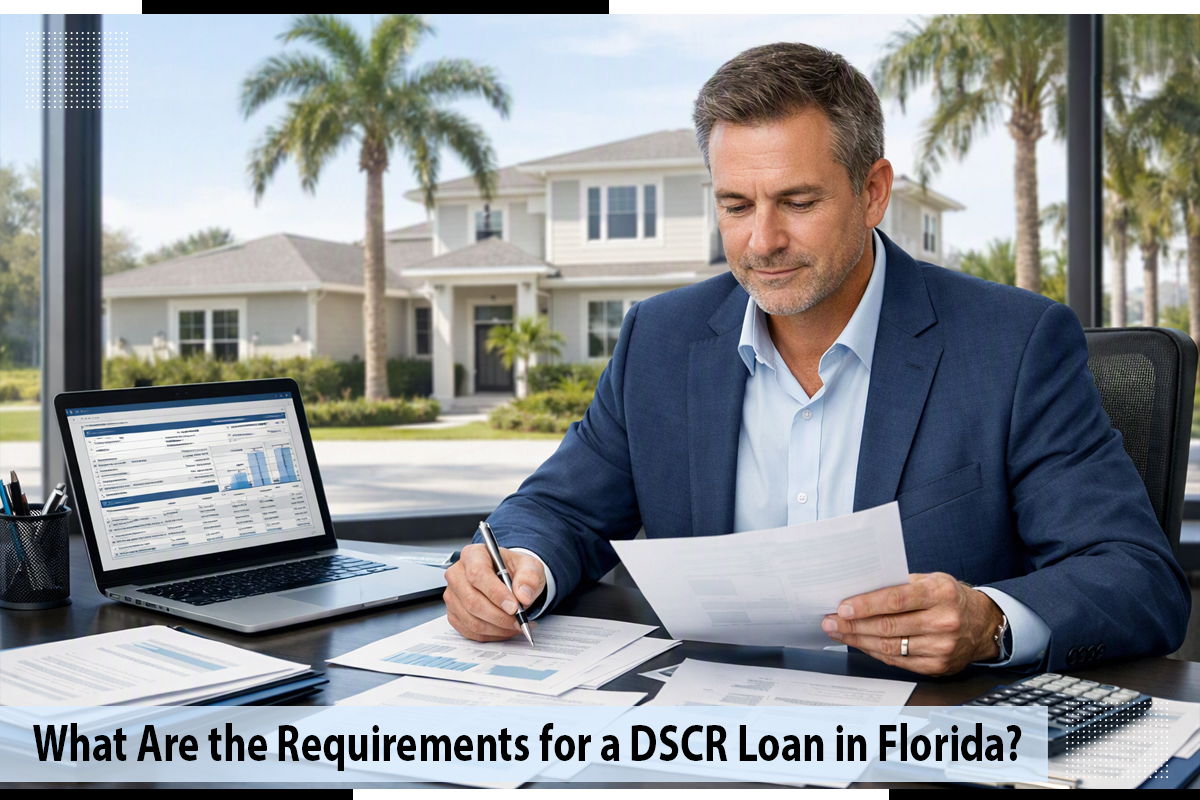
A DSCR Loan in Florida generally requires an income-producing investment property, acceptable rental coverage, sufficient equity, an appraisal, cash reserves, and a borrower who meets the program’s credit and entity requirements. Many DSCR programs focus primarily on the property’s rental income rather than the investor’s employment income or tax returns.
What Is a DSCR Loan?
DSCR stands for debt service coverage ratio. A DSCR loan is business-purpose financing for a non-owner-occupied rental property. The financing source considers whether qualifying rent can cover the proposed debt obligation.
This differs from conventional underwriting, which may rely more heavily on personal income, employment records, debt-to-income calculations, and tax returns. DSCR programs often qualify investors through rental analysis, although credit, liquidity, appraisal results, and reserves still matter.
What Are the Basic Requirements for a DSCR Loan in Florida?
Most applications involve:
- An eligible, non-owner-occupied income-producing property
- A DSCR that meets the selected program
- An appraisal with market-rent support
- A required down payment or sufficient refinance equity
- An acceptable credit profile
- Cash reserves
- Property insurance
- Complete entity documents, when applicable
How Is the Debt Service Coverage Ratio Calculated?
A common calculation is:
DSCR = Qualifying Monthly Rent ÷ Monthly Debt Obligation
The debt obligation may include principal, interest, taxes, insurance, and association dues. The exact method varies by program.
For example, suppose a property has qualifying rent of $3,000 and a monthly debt obligation of $2,500. The DSCR would be 1.20. This means the measured rent is 20 percent higher than the debt obligation.
A ratio above 1.00 means qualifying rent exceeds the measured payment. A ratio below 1.00 indicates a shortfall. Neither figure guarantees approval because each lending partner sets its own standards.
Who Can Qualify for a DSCR Loan?
Potential borrowers include individual investors, approved LLCs, partnerships, self-employed borrowers, and landlords with several financed properties. Some programs may consider foreign nationals, subject to identification, liquidity, residency, and entity requirements.
First-time investors may also qualify, although they may need more equity, stronger reserves, or professional property management.
Eligible Property Types
Depending on the program, eligible properties may include:
- Single-family rental homes
- Duplexes, triplexes, and fourplexes
- Condominiums and townhomes
- Multifamily properties under applicable programs
- Long-term rentals
- Eligible short-term rentals where permitted
Condominiums may require additional review of association finances, insurance, assessments, leasing restrictions, and building condition. Short-term rental eligibility depends on local rules and the income method accepted by the financing source.
Documents You Will Typically Need
Common requests include:
- Purchase contract
- Lease or market-rent analysis
- Property appraisal
- Bank or asset statements
- Evidence of closing funds and reserves
- Government-issued identification
- Property insurance information
- LLC formation documents
- Existing mortgage statement for refinancing
- Title and closing information
Preparing these records before applying can help reduce follow-up requests and avoid preventable underwriting delays.
Florida-Specific Considerations
Insurance deserves early attention in Florida. Premiums, deductibles, wind coverage, roof condition, and property location can affect the monthly obligation used in the DSCR calculation. Florida’s Office of Insurance Regulation provides information about wind-mitigation discounts and policy deductibles.
Flood exposure also matters. Investors can review flood zones through FEMA mapping tools, and flood insurance may be required for certain properties in high-risk areas.
Local rents, property taxes, association fees, and insurance costs should be reviewed before assuming a property will meet a program’s required ratio.
Benefits of DSCR Loans
DSCR financing may offer qualification based mainly on property cash flow, reduced reliance on personal-income documentation, options for self-employed investors, and financing through eligible business entities.
It may also help investors purchase or refinance rental properties when conventional income documentation does not accurately reflect their financial position.
Possible tradeoffs include higher rates, larger down payments, reserve requirements, and prepayment provisions compared with some conventional programs. Investors should compare the complete cost rather than focusing only on the simpler income-verification process.
Common Reasons DSCR Loan Applications Are Denied
Applications may be declined because rental income does not support the payment, the appraisal is lower than expected, reserves are insufficient, credit falls outside program guidelines, or the property condition is unacceptable.
A strong projected rent will not solve every issue. The property must also meet valuation, insurance, title, condition, and ownership requirements.
Tips to Improve Your Chances of Approval
Confirm realistic rent, obtain insurance estimates, review property taxes and association dues, and keep reserves documented before applying.
A larger down payment may reduce the monthly debt obligation and improve the ratio. Strong credit may expand the available financing options. Complete and consistent documents can also help underwriting move more efficiently.
Frequently Asked Questions – FAQS.
What minimum DSCR is required?
There is no universal minimum. Requirements depend on the lending partner, property, leverage, credit profile, and reserves.
Can I qualify without providing tax returns?
Many programs do not use personal tax returns to verify income, but property, asset, and financial documents are still required.
Are DSCR loans available for LLCs?
Many programs permit eligible LLC ownership after reviewing formation documents, ownership percentages, signing authority, and guarantors.
Can first-time investors qualify?
Possibly. Additional equity, stronger reserves, or property-management support may be required.
What credit score is typically needed?
Minimum scores vary. Credit can affect approval, pricing, down payment requirements, and reserves.
Are short-term rentals eligible?
Some programs accept short-term rentals when local regulations permit the use and the rental income meets program standards.
How much down payment is required?
The amount varies according to property type, credit, DSCR, leverage, and the selected lending program.
How long does approval take?
Timing depends on the appraisal, title review, insurance, documentation, and underwriting conditions.
Review the Property Before Choosing the Program
The main requirements for a DSCR Loan in Florida are supported rental income, acceptable property value, sufficient equity, adequate reserves, suitable credit, and complete documentation. Final standards depend on the property, borrower, transaction, and lending partner.
At A to Z Capital, we help investors organize their scenarios and compare DSCR financing available through lending partner relationships. Contact our team to review the property, expected rent, ownership structure, and investment plan before selecting a financing program.
Loan availability, terms, ratios, timelines, and approval are subject to underwriting and may change. This content is educational and does not constitute legal, tax, or investment advice.